Protect Colorado’s Outdoors For Generations to Come
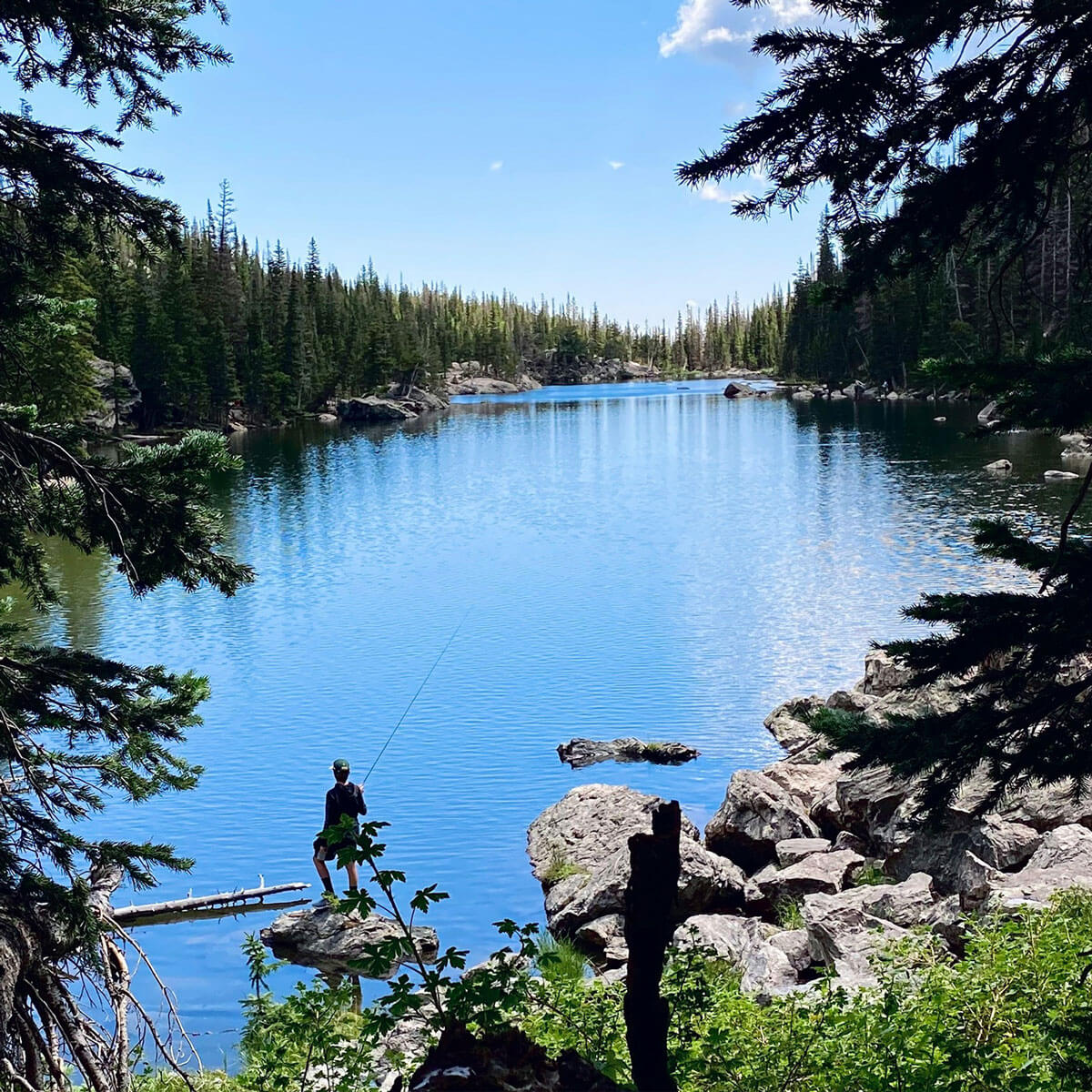
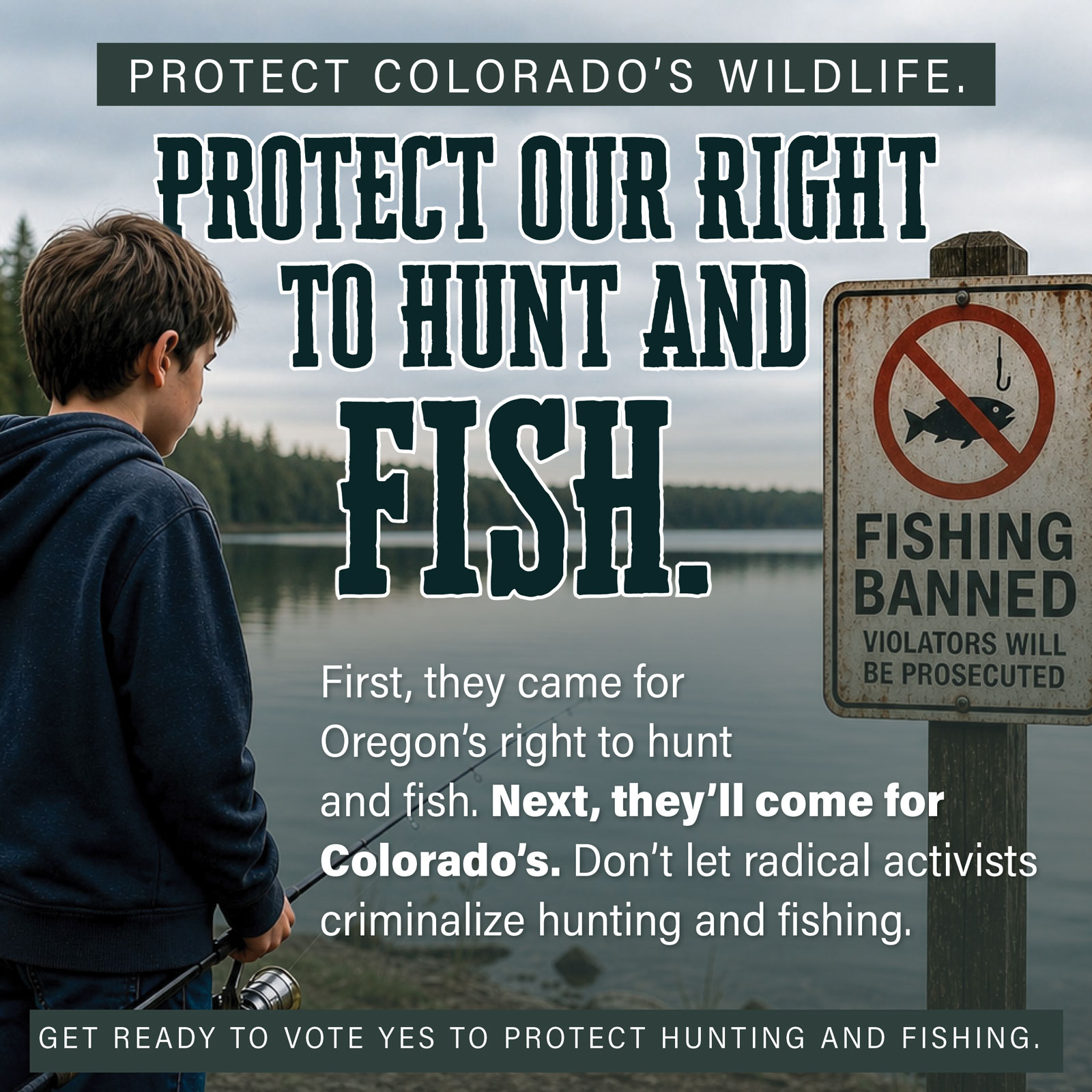
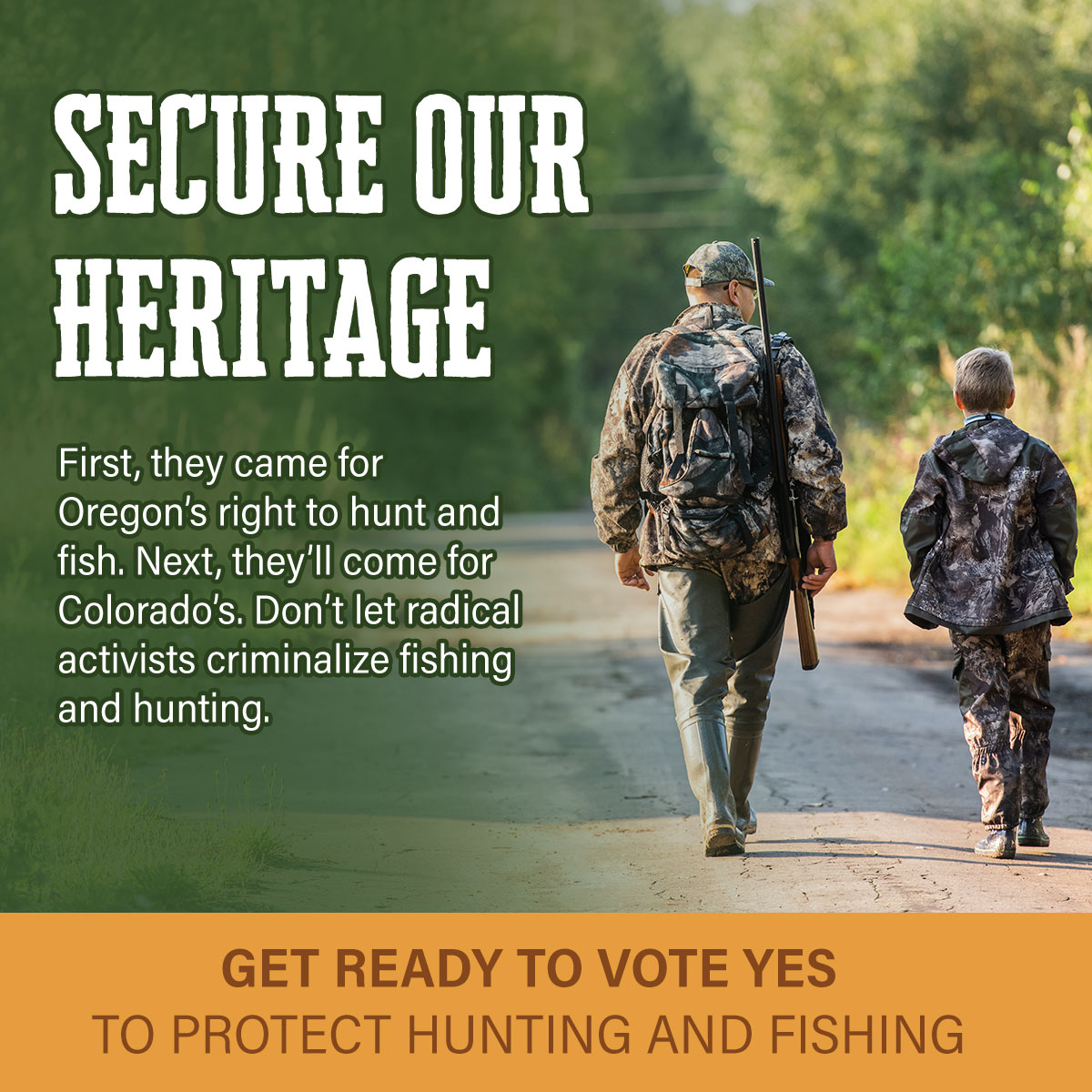
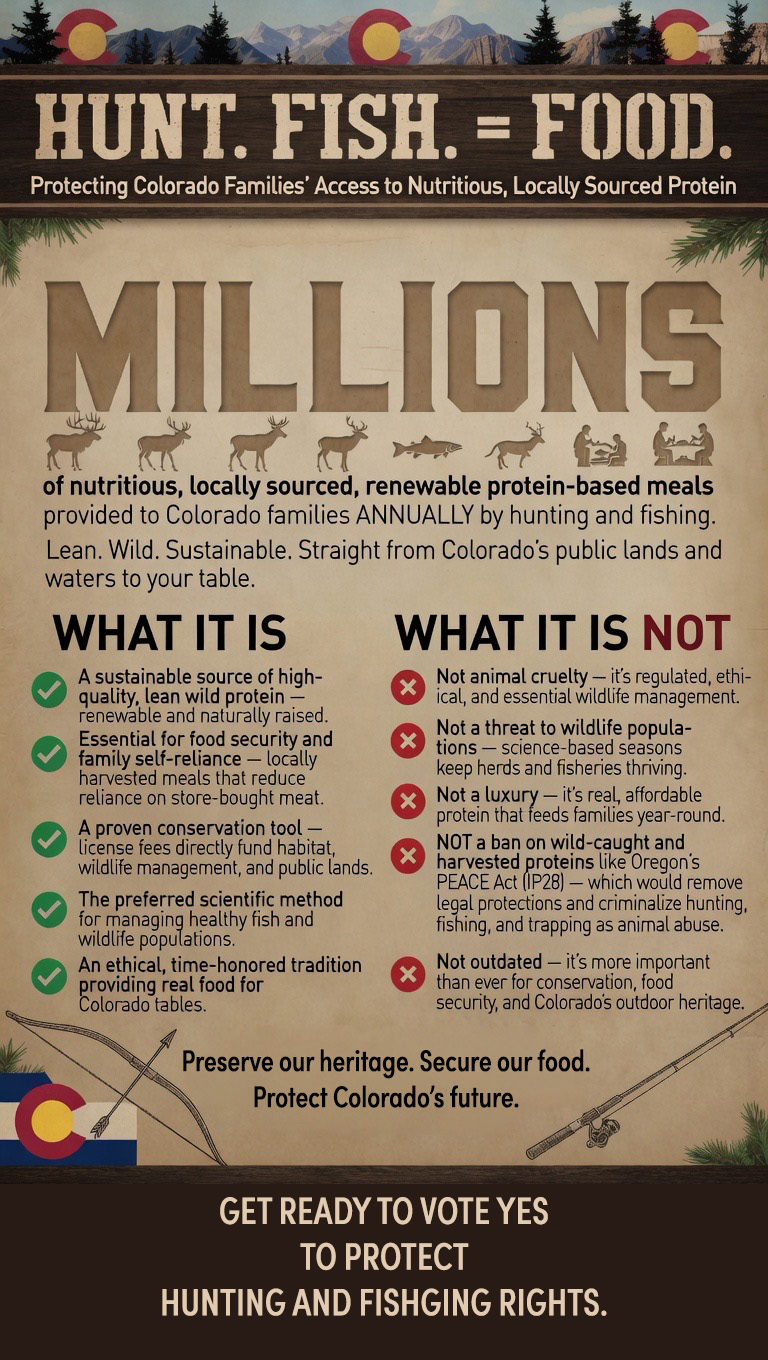
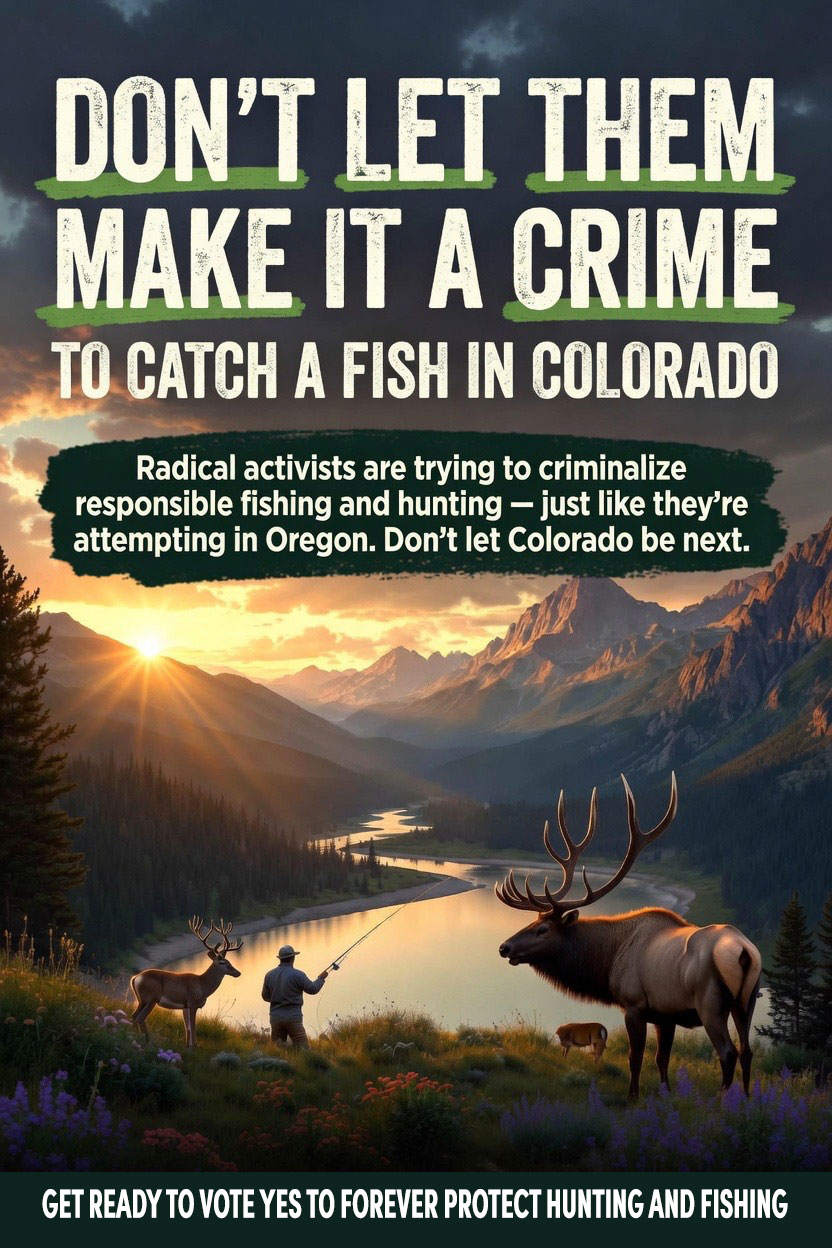
First, they came for Oregon’s right to hunt and fish. Next, they’ll come for Colorado’s. Don’t let radical activists criminalize fishing and hunting.

  • Responsible hunting and fishing sustainably manage wildlife populations.
  • Hunters and anglers fund over 55% of Colorado wildlife conservation through licenses, tags, and excise taxes.
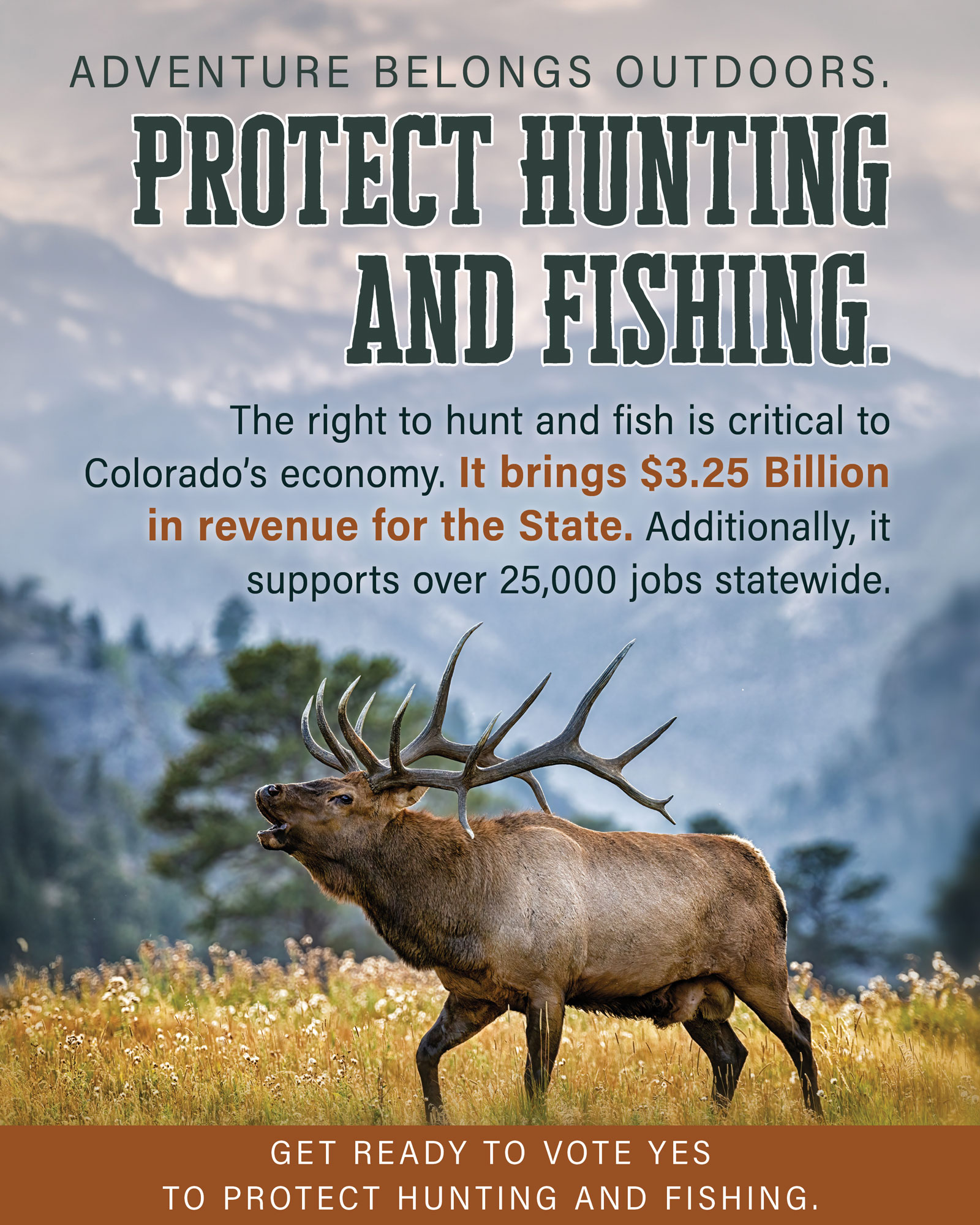
  • The right to hunt and fish is critical to Colorado’s economy. It brings $3.25 Billion in revenue for the State. Over 25,000 Colorado Residents have jobs that relate to hunting and fishing.

Support Colorado’s Right to Hunt and Fish. Get ready to vote YES to save hunting and fishing.
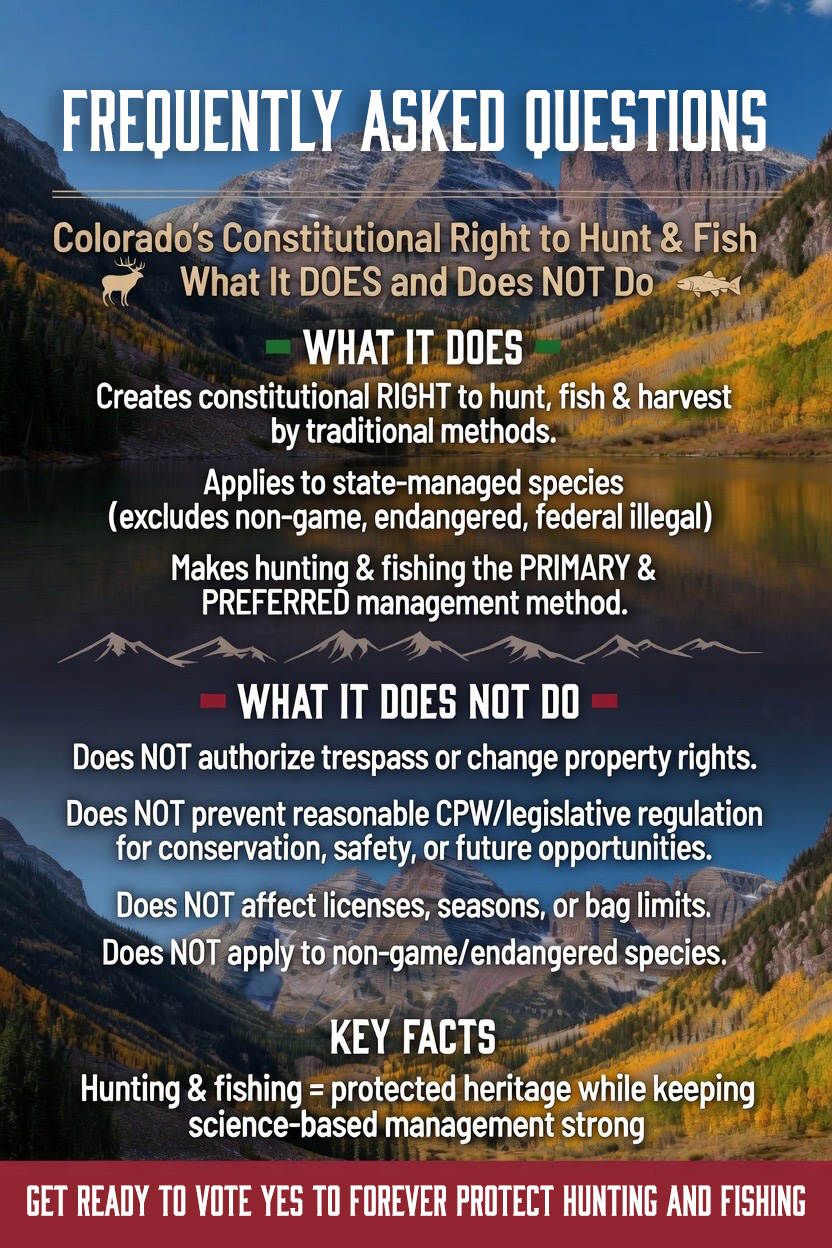
Frequently Asked Questions

What does Colorado Right to Hunt and Fish actually DO?

  • This proposed constitutional amendment supports humane and science-based methods to manage Colorado’s wildlife populations, as endorsed by wildlife biologists
  • Establishes a clear constitutional right for the people of Colorado to hunt, fish, and harvest (take) fish and wildlife using traditional methods.
  • Applies this right to all species managed by the state (deer, elk, trout, etc.).
  • Declares hunting and fishing as the primary and preferred means of responsibly managing and controlling Colorado’s fish and wildlife populations.

What Colorado Right to Hunt and Fish Does NOT do:

  • Does NOT authorize trespass on private property or change any trespass or property rights laws.
  • Does NOT limit the authority of Colorado Parks & Wildlife (CPW) or the legislature to regulate hunting, fishing, and wildlife management.
  • Does NOT apply to non-game species, endangered species, or any species illegal to hunt under federal law.
  • Does NOT eliminate licenses, tags, seasons, bag limits, or safety rules.

Will this change current hunting or fishing regulations?

No. All existing CPW rules, licenses, seasons, and conservation practices stay exactly the same. The amendment simply protects the overall right from being eroded by future laws or ballot measures.

Does this make hunting and fishing unregulated?

Absolutely not. Colorado will continue its world-class, science-based wildlife management. Colorado Right to Hunt and Fish simply puts our heritage on equal constitutional footing with other protected rights while preserving responsible regulation.

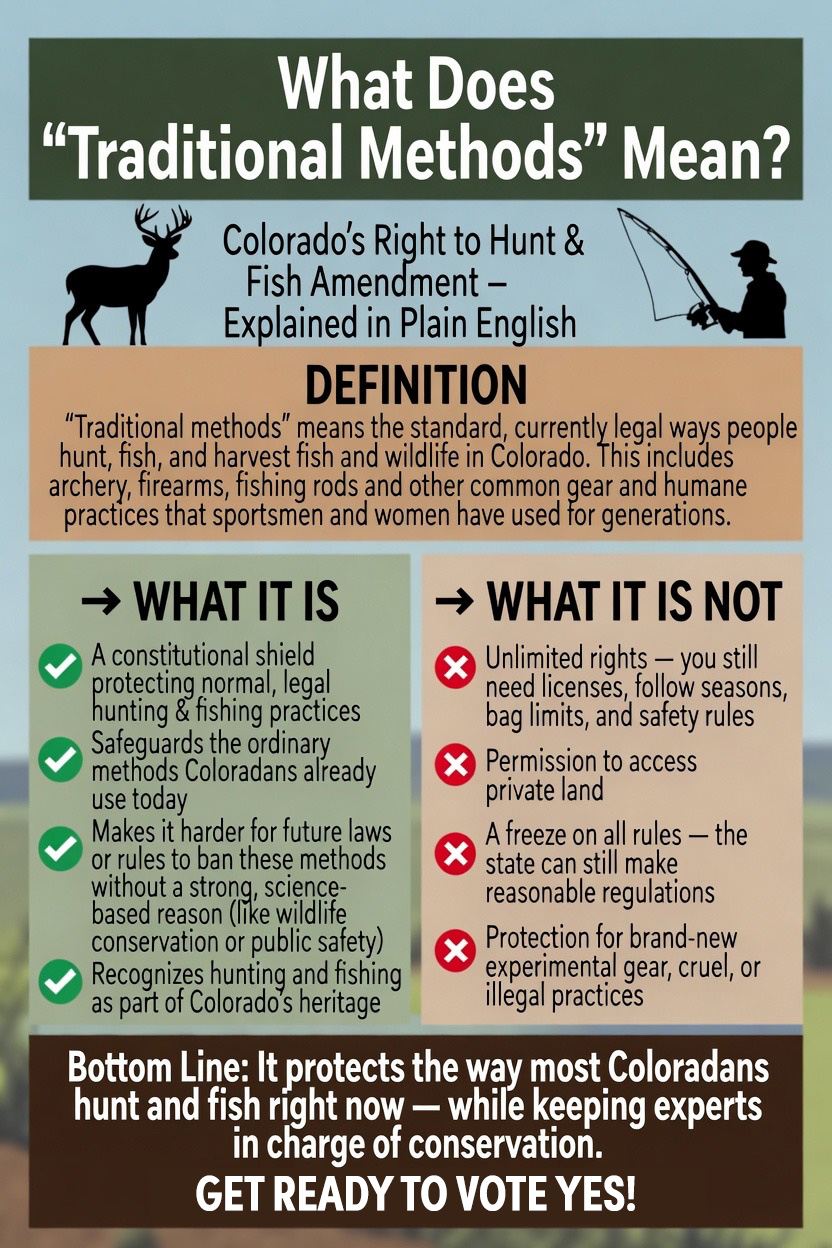
What does "Traditional Methods" mean?

"Traditional Methods" means the currently allowed everyday ways people hunt, fish, and take wild game in Colorado. Think: rifles, shotguns, bows & arrows, muzzleloaders, fishing rods & reels, and other common gear that sportsmen have used for generations. This phrasing safeguards, the ordinary methods Coloradans already use today and makes it harder for any future laws or rules to ban these methods without a strong-based reason. This WOULD NOT freeze rules, the state can still make reasonable regulations. This DOES NOT provide protection for brand-new experimental gear, cruel, or illegal practices.

If someone tries to ban a common method like certain ammo or commonly used fishing gear without good reason, hunters and anglers would be able to use this right to challenge it in court. The bottom line, it protects the way most Coloradans hunt and fish right now while keeping experts in charge of conservation.

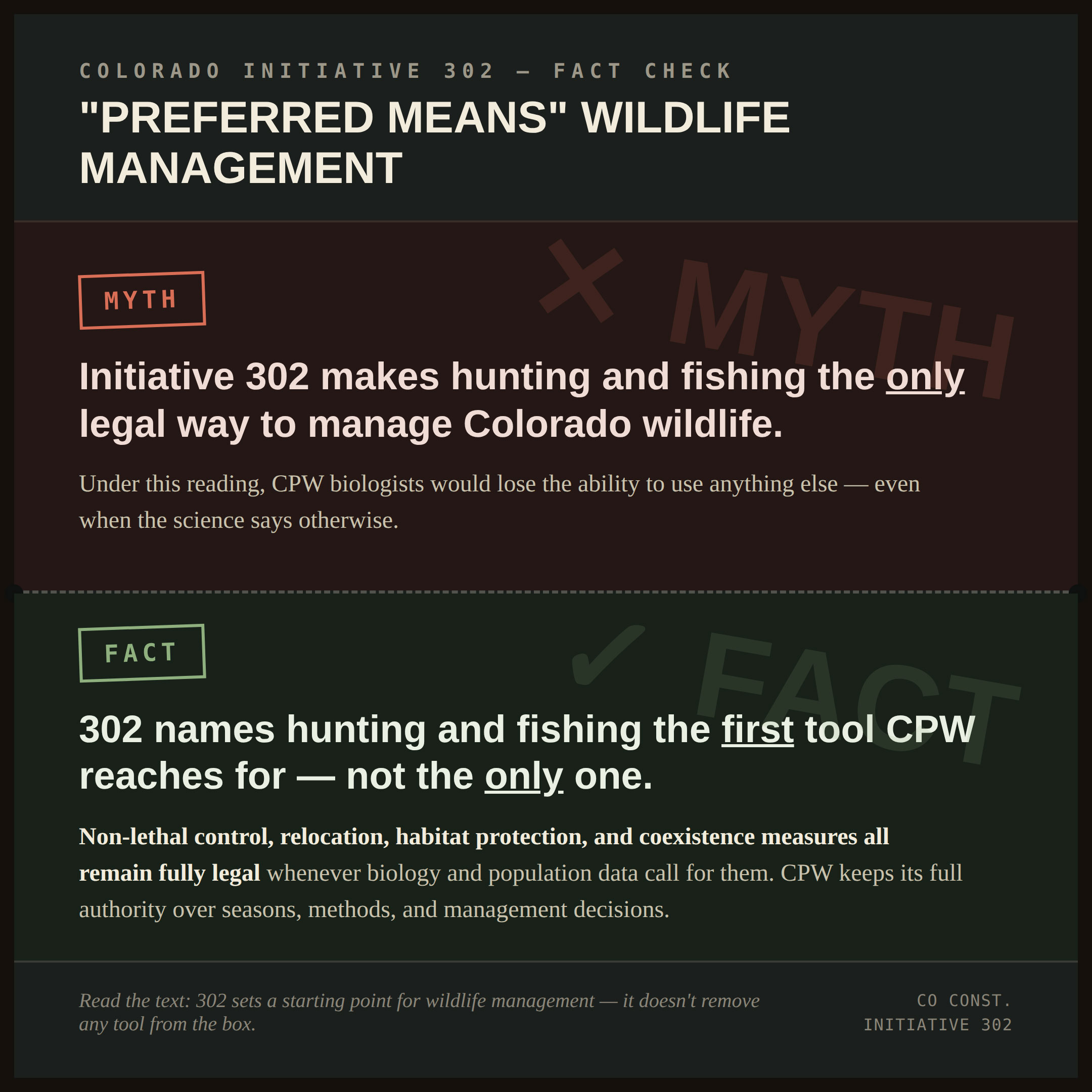
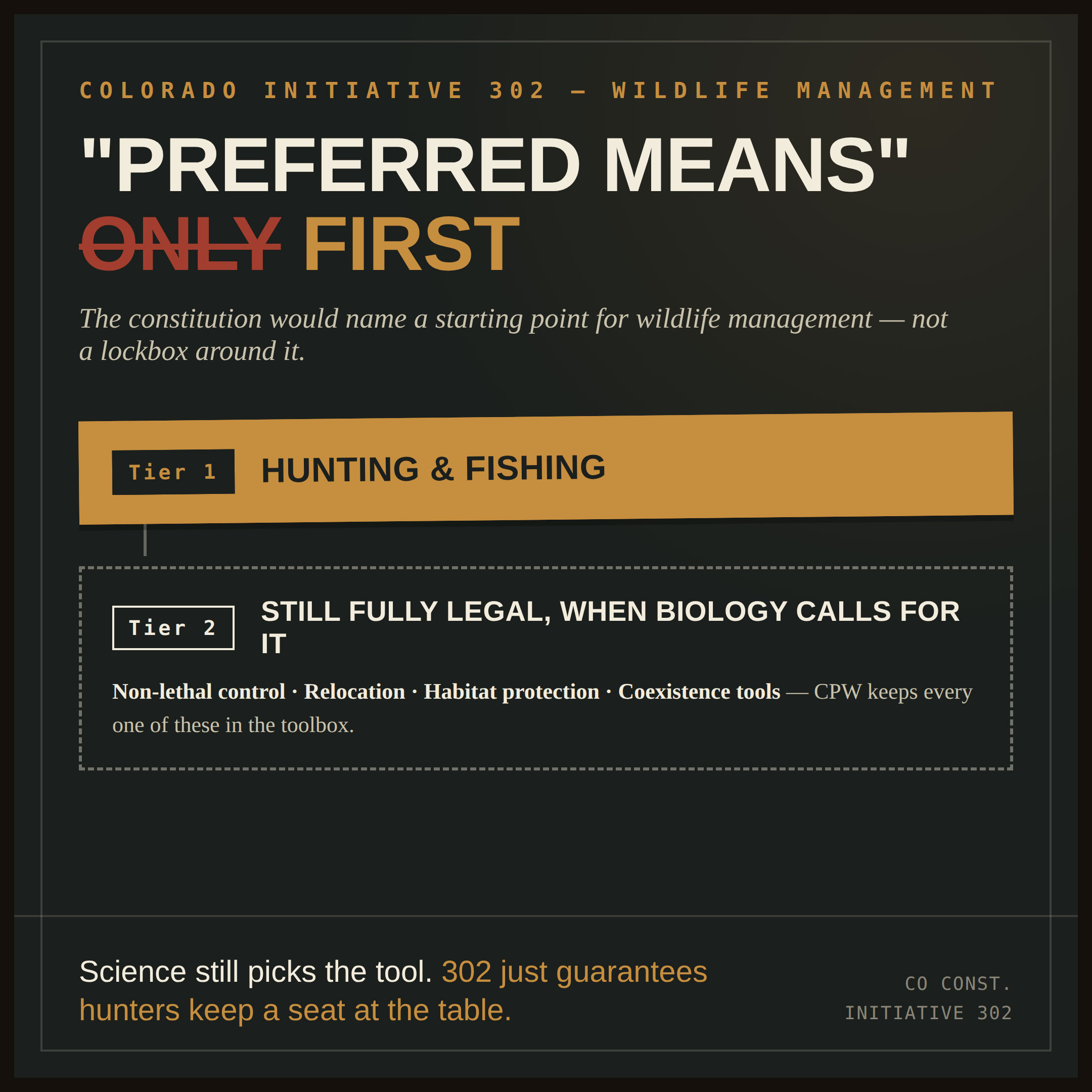
What does "Preferred Means" mean?

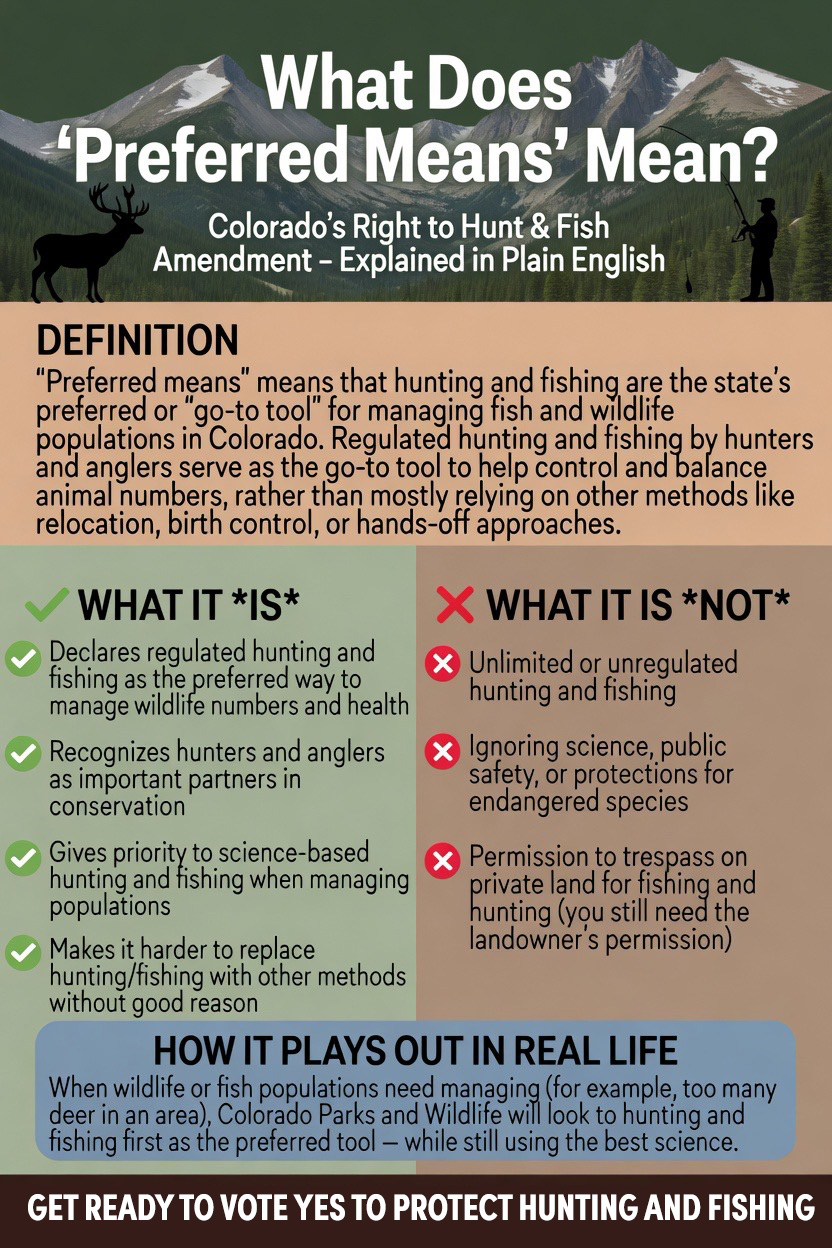
"Preferred Means" means that hunting and fishing are the state's preferred or "go-to tool" for managing fish and wildlife populations in Colorado. Colorado hunters and anglers would be prioritized to help control and balance animal numbers rather than other methods like relocation, birth control, or hands-off approaches.

This gives priority to science-based hunting and fishing to manage populations and recognizes hunters and anglers as important partners in conservation.

Why do we need this now?

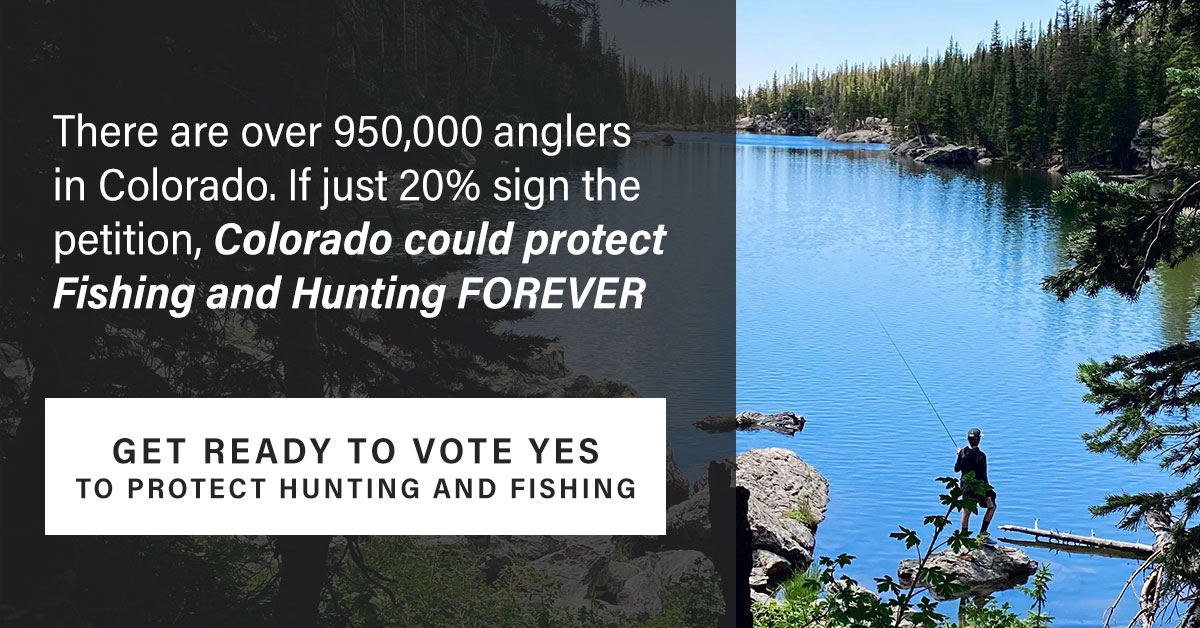
Colorado’s 300,000+ hunters and 950,000+ anglers drive $3.25 billion in economic impact and support 25,000 jobs. With 40% of our 4 million registered voters connected to hunting or fishing, this amendment safeguards our outdoor legacy for future generations against potential overreach.

Resources