Colorado’s Outdoor Heritage Deserves Constitutional Protection
Colorado’s identity has always been tied to the outdoors. From the high plains to the Western Slope, generations of Coloradans have relied on - and cared for - our wildlife and natural landscapes. Hunting and fishing are not just traditions here; they are foundational to how we conserve wildlife, fund habitat restoration, and pass down a deep respect for the land.
As Colorado approaches its 150th anniversary, that legacy is worth protecting.
For a century and a half, hunting and fishing have been part of the fabric of this state - shaping not only our culture, but our conservation model. Long before conservation became a national priority, sportsmen and women were leading the way - funding habitat restoration, supporting species management, and ensuring that wildlife populations remained healthy and sustainable.
But what has long been assumed secure is no longer guaranteed.
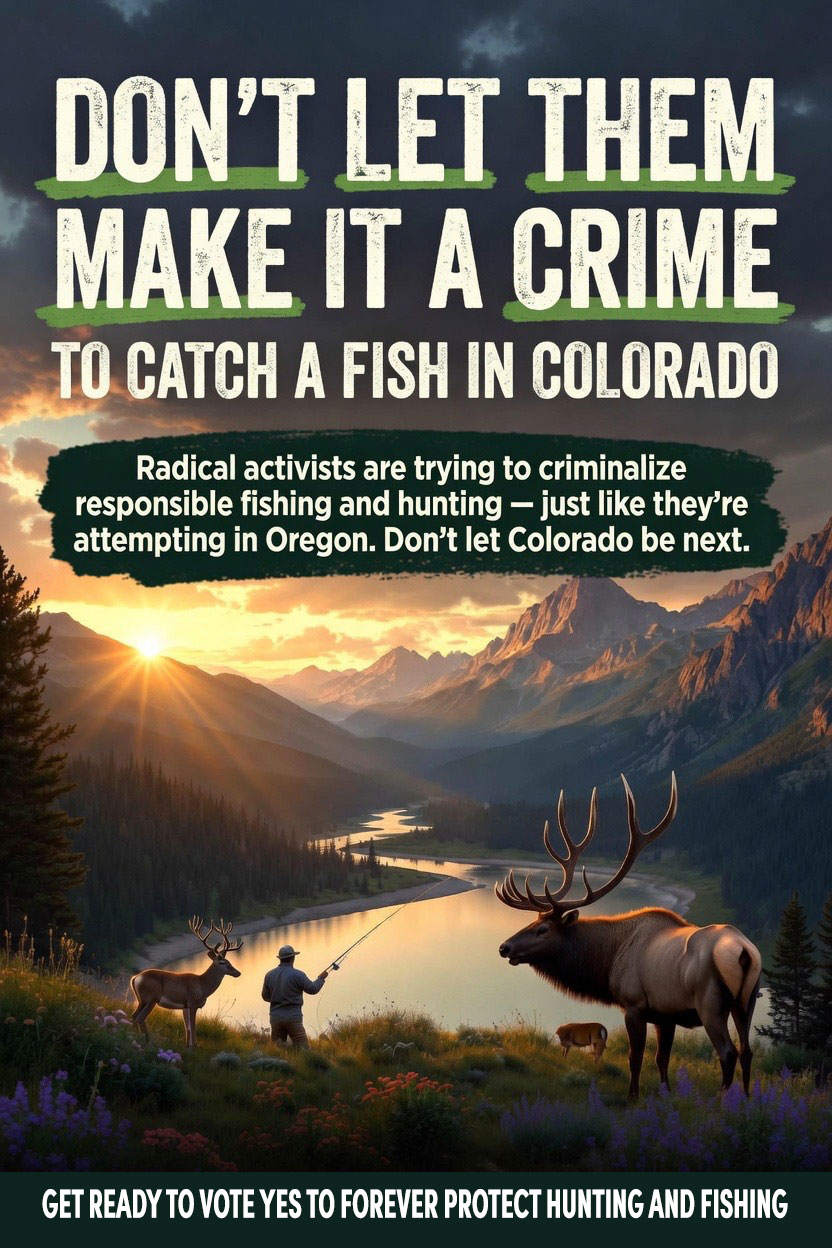
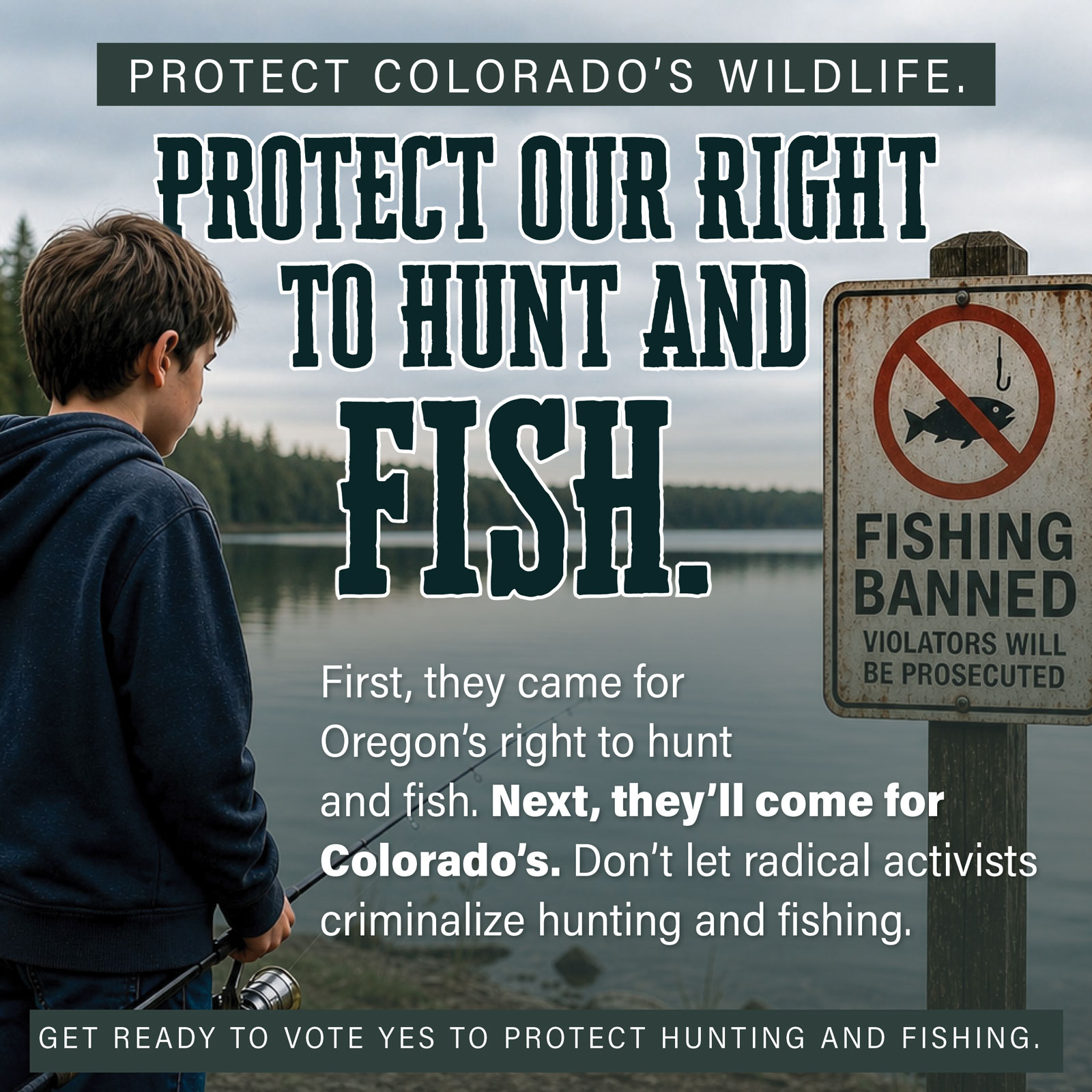
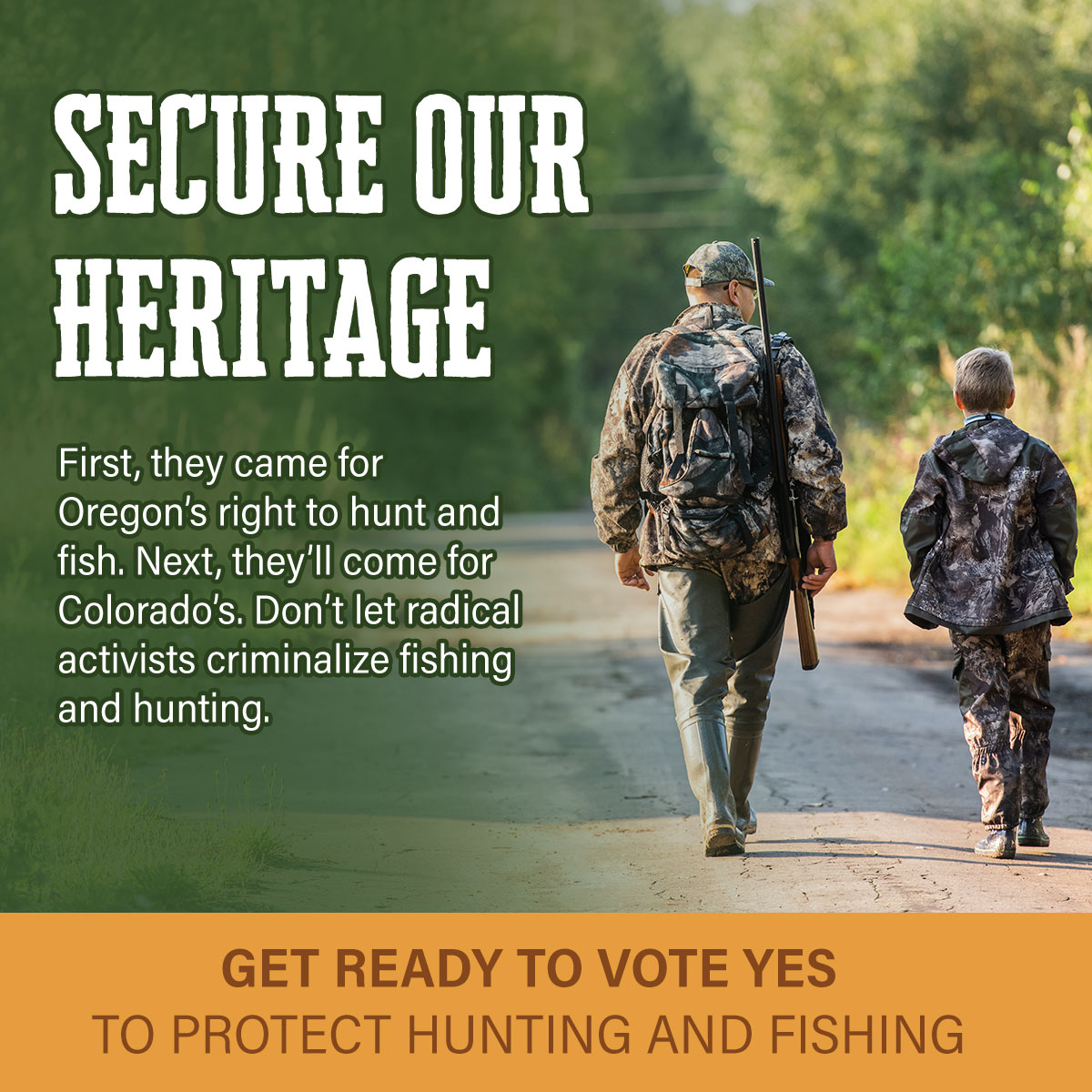
Across the country, a growing movement is working to restrict - or outright eliminate - hunting and fishing. These attempts are no longer hypothetical as was proven by the failed 2024 hunting ban proposal in Colorado. Right now in Oregon, activists are advancing a ballot measure that would effectively ban hunting and fishing altogether and even make it a crime to catch a fish or harvest wild game. If successful, it would dismantle a century-old conservation model and sever the connection between science based wildlife management and the people who have sustained it for generations.
That should serve as a wake-up call - not just for Colorado, but for any state that values its outdoor heritage.
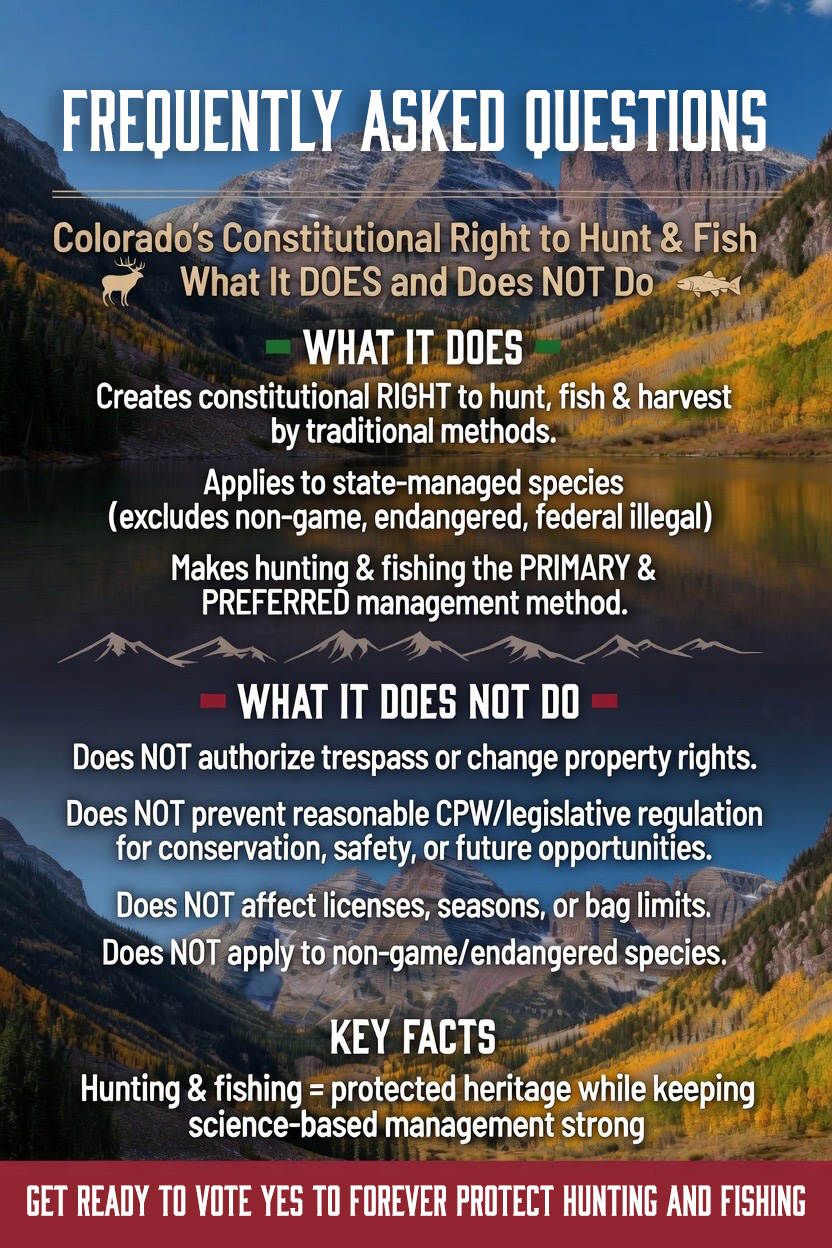
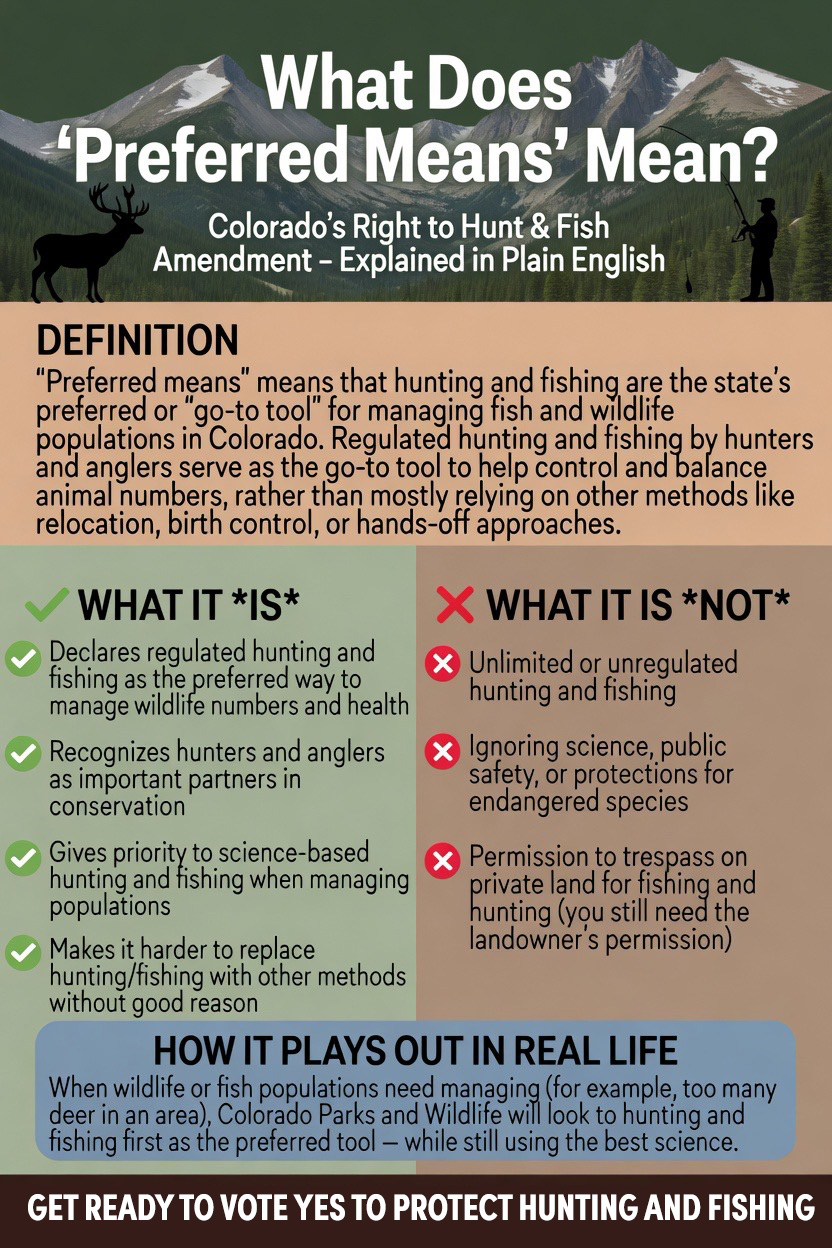
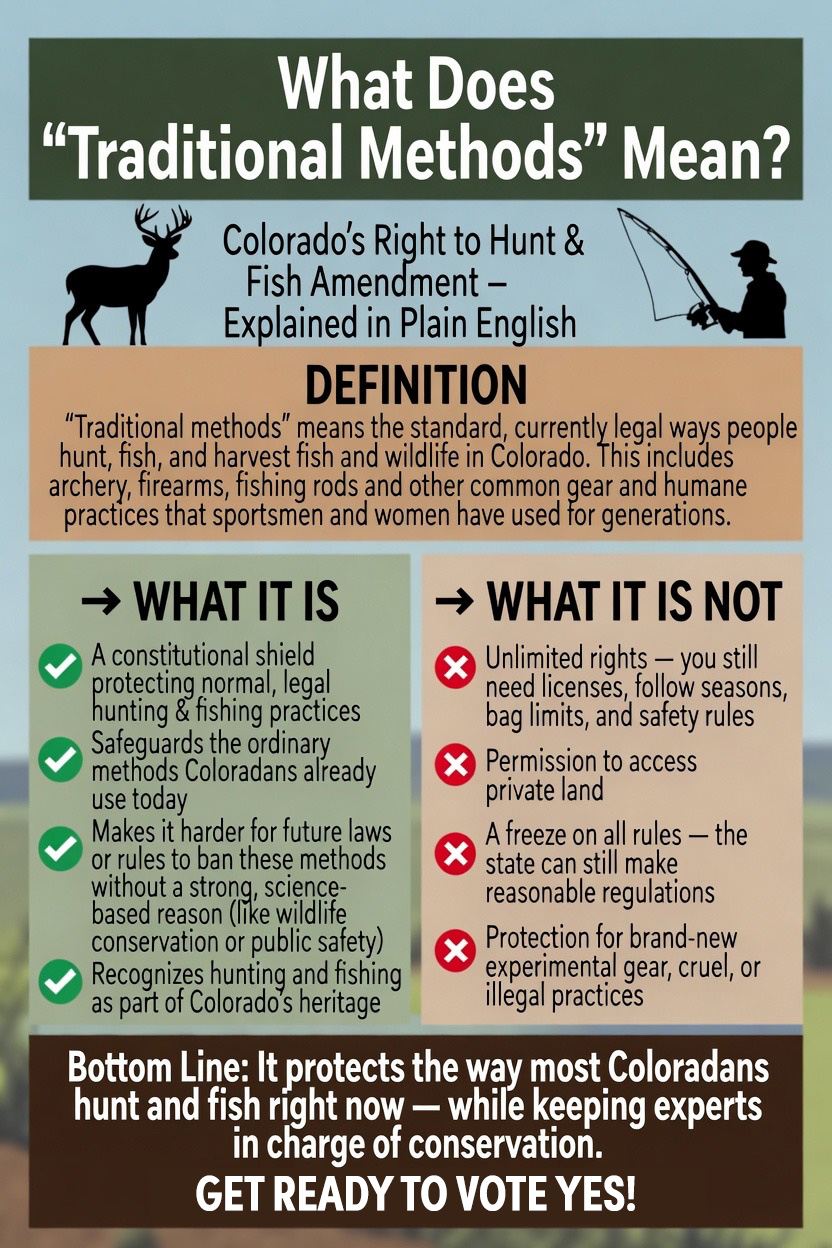
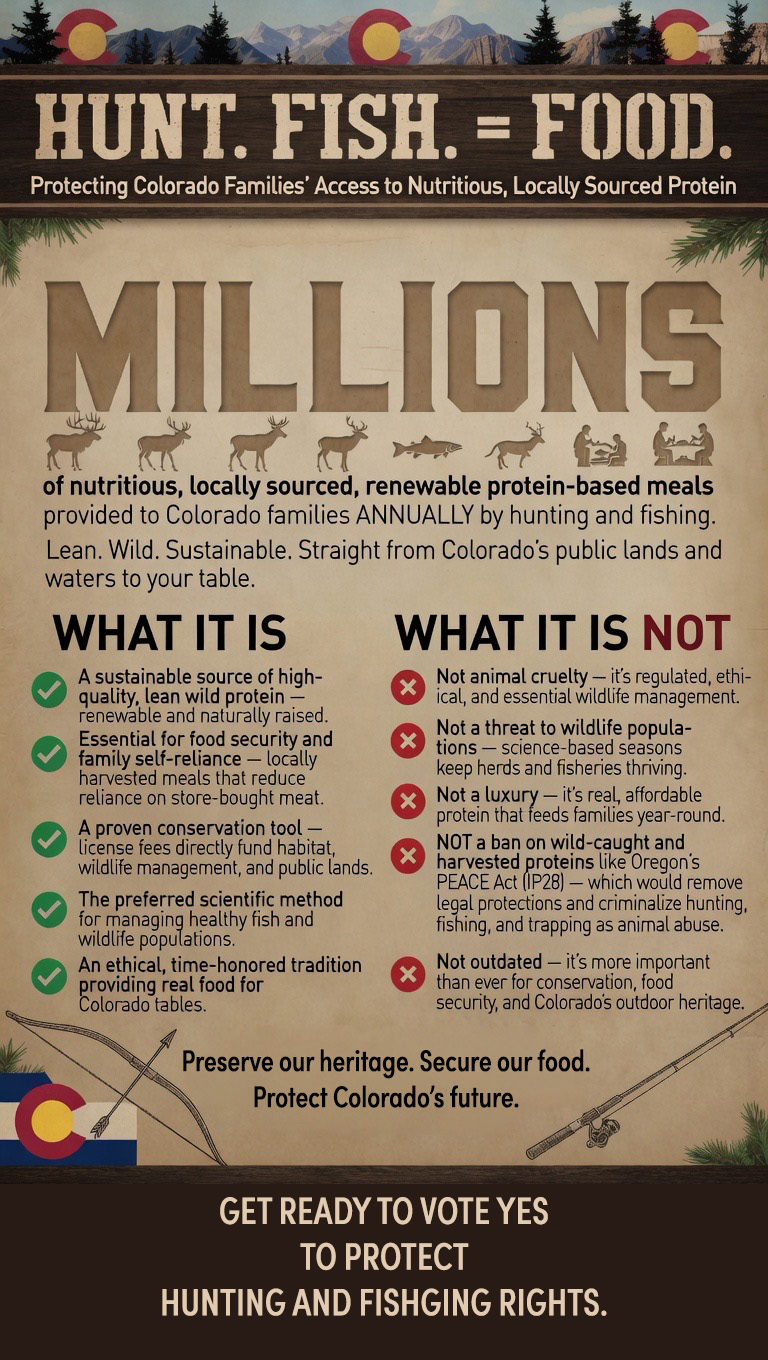
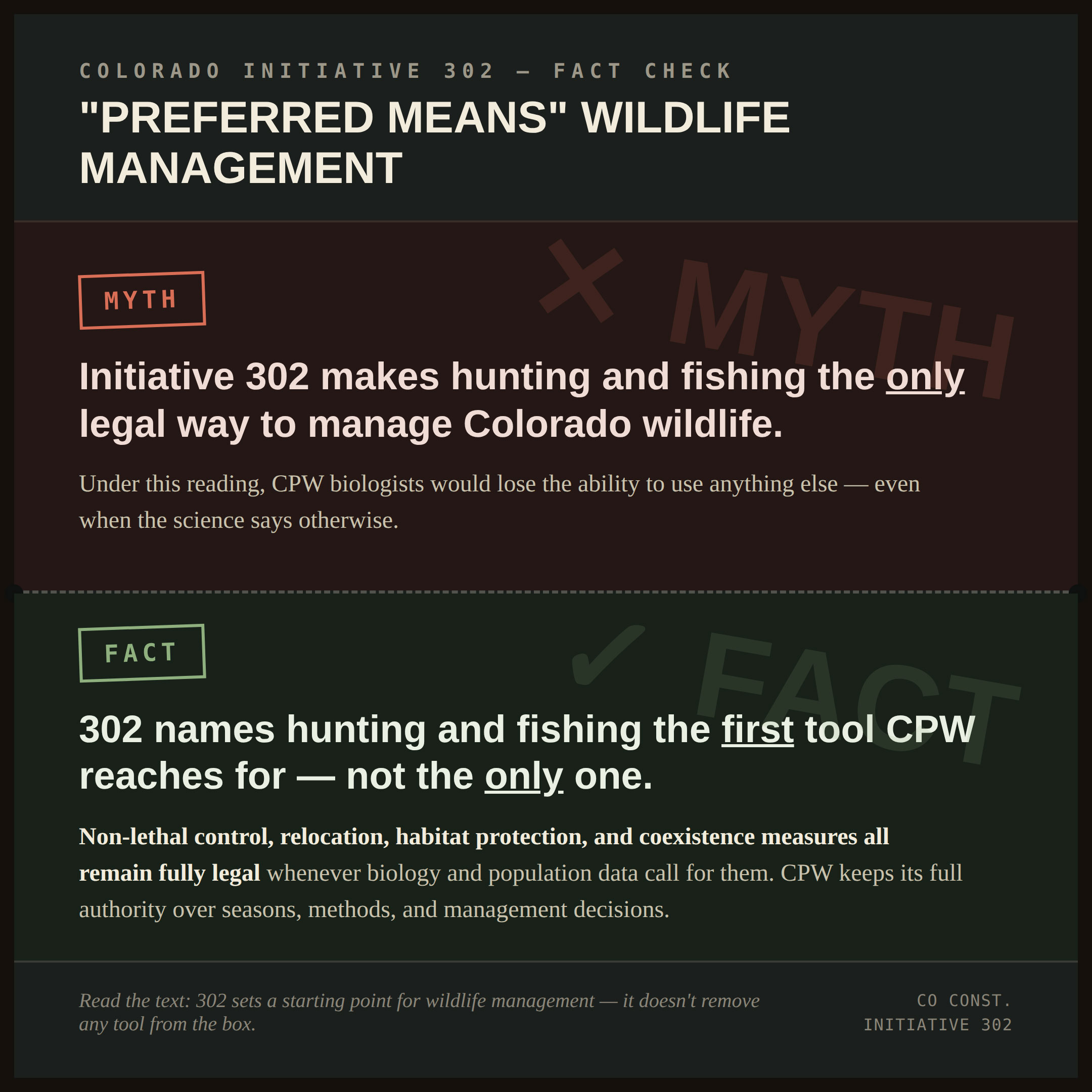
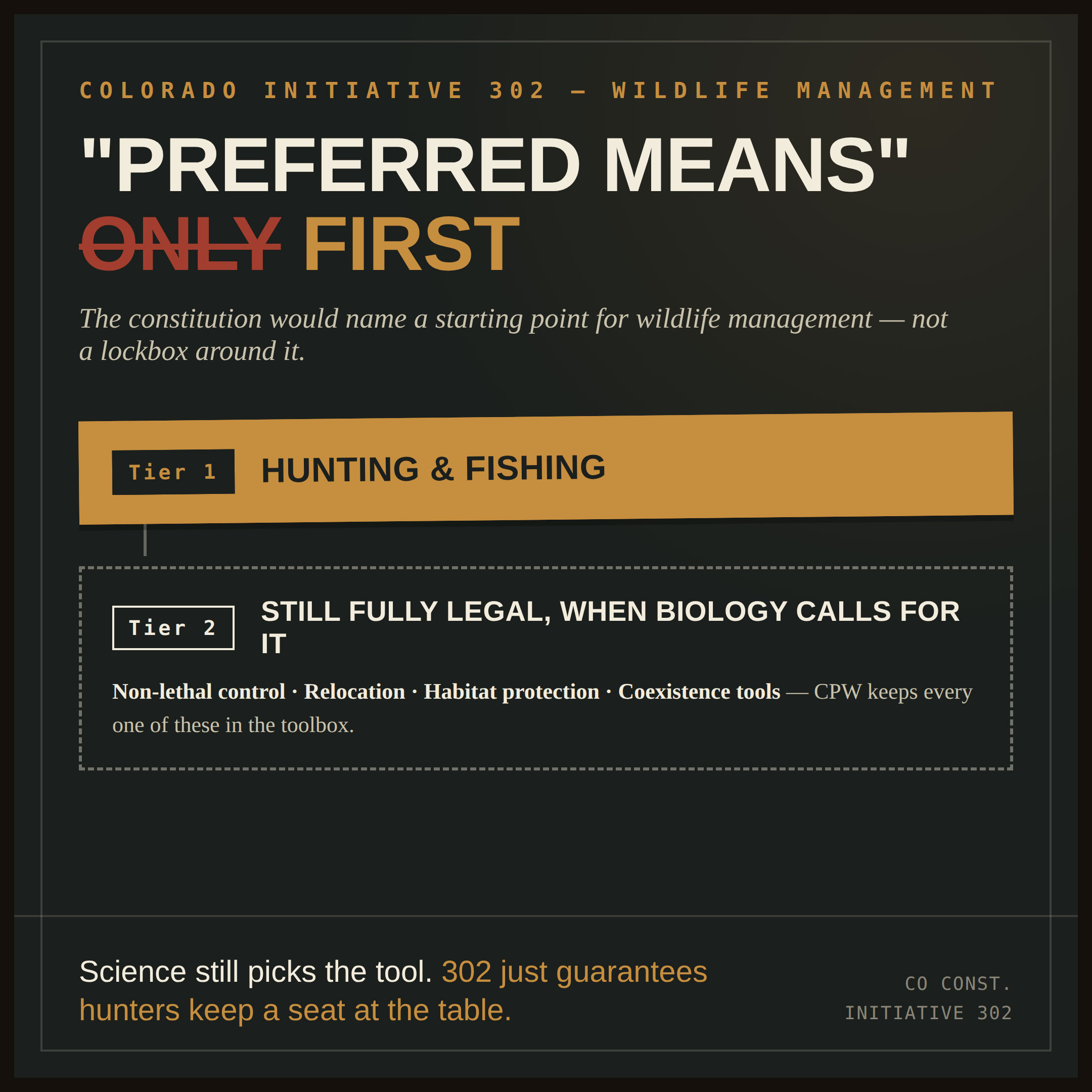
Here in Colorado, a measure is moving toward the ballot that would establish a constitutional right to hunt, fish, and harvest wildlife - ensuring these practices remain protected for generations to come. Known as Initiative 302, the measure would affirm hunting and fishing as the preferred methods of wildlife management, while preserving the state’s authority to regulate these activities based on sound science, public safety, and long-term conservation goals. This would make Colorado the 25th state to enshrine these conditionally protected rights constitutionally.
This approach strikes the right balance. It protects a way of life deeply rooted in Colorado’s history while maintaining the flexibility wildlife professionals need to do their jobs. It does not eliminate science-based regulation or weaken safeguards or allow trespass on private lands, all arguments the opposition to our lifestyle will undoubtedly forward.
Experience in the 24 states with similar protections proves these amendments do not disrupt effective management—they reinforce it. Instead, it strengthens a system that has worked for over 125 years - one that is widely regarded as the gold standard of conservation globally.
And that system works exceptionally well in practice.
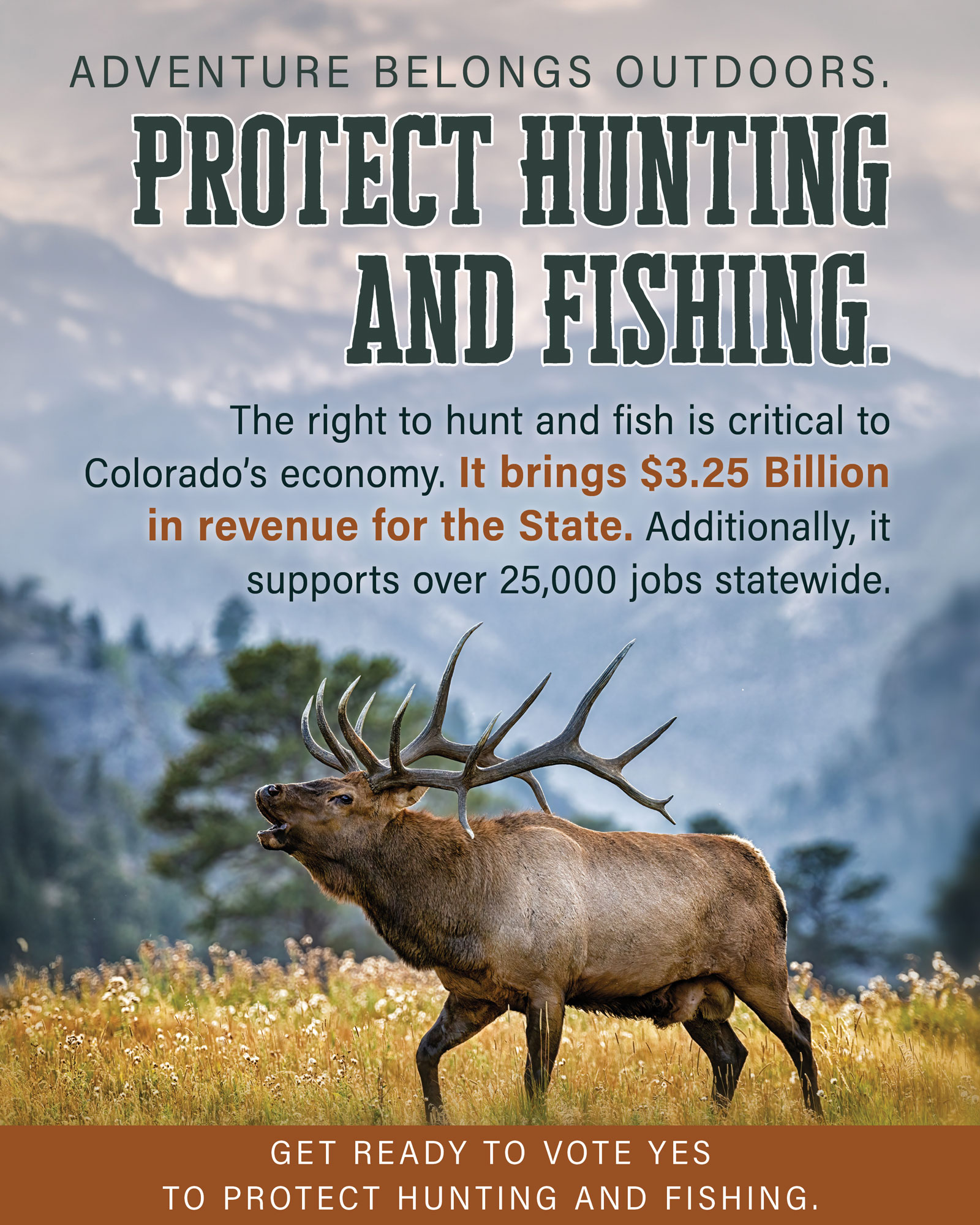
Hunters and anglers are the backbone of wildlife conservation funding. In Colorado, through license fees and excise taxes on equipment, they contribute more than $117 million annually to habitat restoration, species management, and public access. These activities support more than $3.25 billion in broader economic output and approximately 25,000 jobs. These investments support everything from maintaining healthy elk, deer and over 959 other wildlife species - to restoring fisheries and protecting critical habitat across the state.
Equally important, hunting and fishing are essential tools for managing wildlife populations. Carefully regulated seasons help prevent overpopulation, reduce the spread of disease, and protect ecosystems from imbalance. These decisions are guided by science and data—not politics, not emotion, and not one-size-fits-all mandates.
Yet increasingly, those decisions are being challenged.
Efforts like the one unfolding in Oregon and earlier efforts in Colorado are part of a broader strategy to bypass state wildlife agencies and impose sweeping restrictions through the ballot box. These campaigns often ignore both the science behind wildlife management and the funding structure that makes conservation possible in the first place.
As our state continues to grow and urbanize, fewer people have direct connections to hunting and fishing. This demographic shift, combined with well-funded campaigns often driven by out-of-state interests, makes proactive protection more urgent than ever. That makes it easier for these out of touch activists to reshape policy in ways that may feel good in theory but have real consequences for wildlife and habitat.
That is why acting now matters.
By placing this constitutional protection before voters, Colorado has the opportunity to take a proactive step to safeguard a 150-year legacy, to ensure wildlife management remains grounded in science, and to preserve the role that hunters and anglers play in conservation.
This is not about partisanship. It is about protecting a proven model and a shared heritage that benefits all Coloradans - whether they hunt, fish, or simply value healthy wildlife and open spaces.
The lesson from Oregon is clear: what once seemed unthinkable is now on the ballot.
Colorado should take that lesson seriously. By joining the 24 other states and affirming the right to hunt and fish in the state constitution, we can ensure that this defining part of Colorado’s history - and future - remains intact for the next 150 years.